SPAA 2026 Conference Program
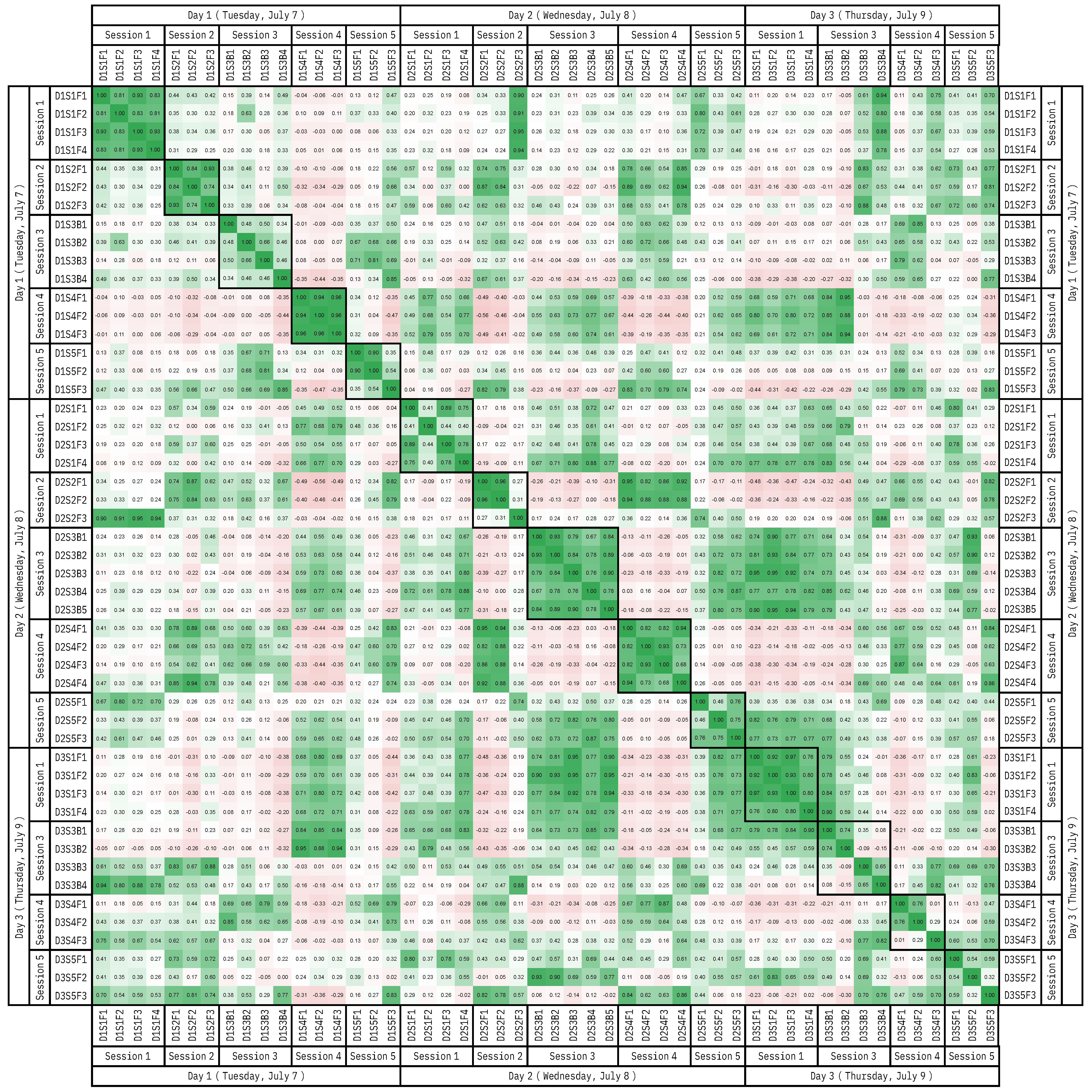
Correlation Heat Map
Each cell in the grid below represents the correlation coefficient between a distinct pair of papers appearing in the SPAA 2026 program. Please note that this coefficient does not directly compare the contents of the two papers. Rather, it does so indirectly. Specifically, it is the Pearson correlation coefficient between the PC expertise vectors computed by the Toronto Paper Matching System (TPMS) for the two papers.
These 73-dimensional expertise vectors were originally generated to assist with reviewer assignment. Each vector reflects the similarity between a paper and the expertise profiles of the 73 members of the SPAA 2026 Program Committee. The expertise profiles themselves are derived from representative publications of the PC members, while the paper profiles are derived from the paper contents.
The correlation coefficient ranges from -1 (red) to +1 (green), with +1 indicating perfect positive correlation. Consequently, if an attendee finds a particular paper interesting, the correlation values may provide some indication of which other papers in the program they are likely to find interesting as well.
Hover your mouse over a grid cell to view information on the pair of papers associated with that cell, including the paper titles, authors, and the correlation coefficient.
The squares outlined in black along the diagonal of the grid correspond to the presentation sessions in the conference program. These sessions were created manually and independently of the correlation coefficients shown here.
Each paper is assigned an identifier of the form DxSyPz, where:
- x ∈ [1, 3] denotes the conference day,
- y ∈ [1, 5] denotes the session number on that day, and
- z ∈ [1, 5] denotes the paper's position within the session.
For full papers, P = F, while for brief announcements, P = B.